Lith Corporation, founded in 1998 by a group of material science doctor from Tsinghua University, has now become the leading manufacturer of battery lab&production equipment. Lith Corporation have production factories in shenzhen and xiamen of China.This allows for the possibility of providing high quality and low-cost precision machines for lab&production equipment,including: roller press, film coater,mixer, high-temperature furnace, glove box,and complete set of equipment for research of rechargeable battery materials. Simple to operate, low cost and commitment to our customers is our priority.
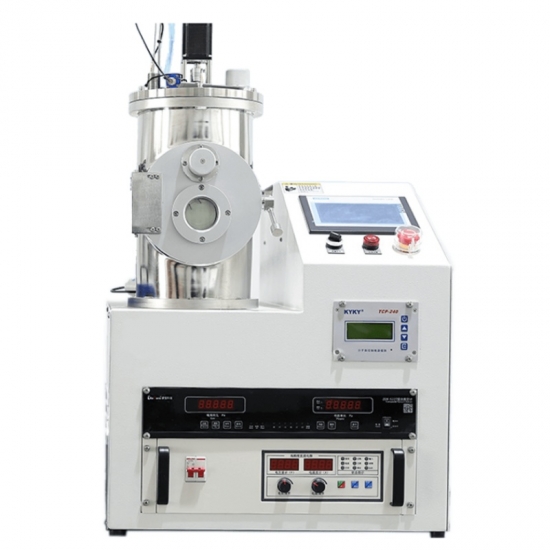
Small PVD Thermal Evaporation Coater: Compact Precision Equipment for Thin Film Deposition
Overview
The Small PVD Thermal Evaporation Coater is a compact and versatile vacuum deposition system designed for producing high-quality thin films on various substrates. Operating on the principle of physical vapor deposition (PVD), this system vaporizes target materials in a controlled vacuum environment and allows them to condense onto substrates, forming uniform, adherent coatings. Its small footprint and ease of use make it especially suitable for laboratories, research institutions, and prototype development in electronics, optics, materials science, and nanotechnology.
Unlike large industrial evaporation systems, the small PVD thermal evaporation coater provides a balance between performance and accessibility. It allows researchers and engineers to experiment with a wide range of materials, including metals, alloys, and some compounds, while maintaining precise control over deposition parameters. The system’s compact design does not compromise film quality, enabling high-purity, uniform thin films comparable to those produced in larger facilities.
Features
Small PVD Thermal Evaporation Coaters incorporate several advanced features to ensure reliability, precision, and safety:
1. Compact Vacuum Chamber
The stainless-steel vacuum chamber provides a high-vacuum environment, reducing contamination and enabling efficient vapor transport from the source to the substrate.
2. Versatile Evaporation Source
The system typically uses resistive heating boats, filaments, or crucibles to vaporize materials. This allows the deposition of a variety of metals, alloys, and certain organic compounds.
3. Substrate Holder with Rotation
The substrate holder can rotate or oscillate during deposition, ensuring uniform film thickness across the substrate surface.
4. Thickness Monitoring System
Quartz crystal microbalance (QCM) sensors provide real-time monitoring of deposition rate and film thickness, allowing precise control over coating parameters.
5. Digital Control and Automation
User-friendly interfaces enable operators to program deposition cycles, adjust heating power, and control deposition time, ensuring repeatable and consistent results.
6. Safety and Maintenance Features
Systems are often equipped with vacuum interlocks, temperature protection mechanisms, and easily accessible components for safe operation and simplified maintenance.
Process
The deposition process in a small PVD thermal evaporation coater is highly controlled to ensure film quality and uniformity. The process begins with cleaning the substrate to remove dust, grease, or other contaminants that could interfere with film adhesion.
Next, the substrate and source material are loaded into the vacuum chamber. The chamber is evacuated using vacuum pumps to achieve high vacuum levels, typically ranging from 10⁻⁵ to 10⁻⁷ torr. High vacuum is critical to minimize collisions between evaporated atoms and residual gas molecules, ensuring efficient deposition.
Once the vacuum is established, electrical power is applied to the evaporation source. The material heats up and vaporizes, and the atoms travel through the vacuum to condense onto the substrate, forming a thin, uniform film. During deposition, the quartz crystal monitor tracks the film thickness and deposition rate, allowing the operator to maintain precise control.
After the desired film thickness is achieved, the heating source is turned off, the system cools, and the chamber is vented to atmospheric pressure for safe substrate removal.
Organics PVD Deposition
Applications
Small PVD Thermal Evaporation Coaters are widely used across research and industrial fields:
* Electronics and Semiconductor Research: Deposition of metal contacts, interconnects, and conductive layers for devices and sensors.
* Optics: Fabrication of reflective coatings, anti-reflective layers, and optical filters with precise thickness control.
* Nanotechnology: Production of nanoscale thin films for studying electrical, magnetic, and optical properties.
* Surface Analysis Preparation: Coating non-conductive samples with thin metal layers for scanning electron microscopy (SEM).
* Prototype Development: Small-scale production of experimental devices requiring high-quality thin films.
Advantages
The small PVD thermal evaporation coater offers several benefits:
1. Compact and Space-Efficient: Suitable for laboratories and small-scale production environments without sacrificing performance.
2. High Film Purity: Vacuum operation minimizes contamination, ensuring clean, high-quality coatings.
3. Precise Thickness Control: Real-time monitoring and adjustable deposition parameters allow consistent, reproducible results.
4. Versatility: Supports a wide range of materials, substrates, and coating applications.
5. Low Thermal Impact: Suitable for heat-sensitive substrates due to controlled deposition rates and temperatures.
6. Ease of Use and Maintenance: User-friendly interfaces, automated control, and accessible components simplify operation and upkeep.
Conclusion
The Small PVD Thermal Evaporation Coater is a vital tool for laboratories and research environments requiring high-quality, uniform thin films. By combining compact design, precise control, and reliable vacuum deposition technology, it enables the fabrication of coatings for a wide variety of scientific and industrial applications.
Its versatility, ease of use, and ability to produce high-purity films make it ideal for electronics, optics, nanotechnology, and prototype development. As research and industrial demands continue to evolve, small PVD thermal evaporation coaters will remain an indispensable tool for advancing thin film technology, materials science, and experimental innovation.


 +86 13174506016
 Louis@lithmachine.com
 +86 18559646958
 18659217588
 English ▼


