Lith Corporation, founded in 1998 by a group of material science doctor from Tsinghua University, has now become the leading manufacturer of battery lab&production equipment. Lith Corporation have production factories in shenzhen and xiamen of China.This allows for the possibility of providing high quality and low-cost precision machines for lab&production equipment,including: roller press, film coater,mixer, high-temperature furnace, glove box,and complete set of equipment for research of rechargeable battery materials. Simple to operate, low cost and commitment to our customers is our priority.
Magnetron Sputtering Coating System: Overview, Features, Processes, Applications, and Advantages
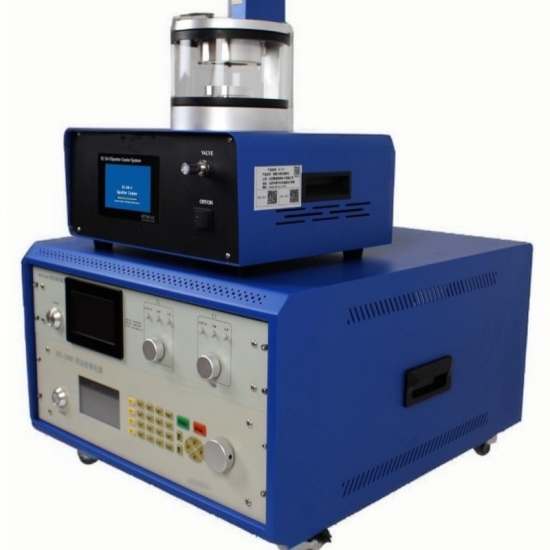
A Magnetron Sputtering Coating System is a highly advanced Physical Vapor Deposition (PVD) technology used to produce precision thin films across a wide range of materials and substrates. By integrating magnetic field control with plasma-enhanced sputtering, this system provides superior deposition efficiency, enhanced film uniformity, and exceptional process stability compared with conventional sputtering methods. Magnetron sputtering has become a foundational technique in industries such as microelectronics, optics, renewable energy, and surface engineering, where thin-film properties directly determine product performance.
Overview
At its core, a Magnetron Sputtering Coating System uses a magnetron cathode to confine electrons in a magnetic field near the target surface, creating a high-density plasma. This plasma greatly enhances the ionization rate of inert gases such as argon, leading to more efficient bombardment of the target and higher sputtering rates. The resulting atoms ejected from the target deposit onto the substrate, forming a thin, dense, and highly adherent coating. Systems may range from compact benchtop units for material research to large-scale, multi-chamber industrial platforms capable of continuous production.
These systems are engineered for precise control over film thickness, composition, and microstructure, making them ideal for applications requiring reproducibility and high-quality coatings.
Key Features of a Magnetron Sputtering Coating System
Modern Magnetron Sputtering Coating Systems incorporate sophisticated engineering designs to support demanding thin-film requirements. Key features include:
1. High-Performance Vacuum Architecture
The system typically integrates multiple pumping stages—such as rotary pumps and turbomolecular pumps—to achieve ultra-high vacuum levels. A clean, low-pressure environment ensures minimal contamination and promotes high-purity film growth.
2. Magnetron Cathodes (Planar or Rotatable)
Magnetron sources use strong magnetic fields to increase plasma density while reducing substrate heating. Rotatable magnetrons are employed in industrial systems to improve target utilization and extend operational lifespan.
3. Advanced Power Supplies
The equipment supports power modes including DC, RF, mid-frequency (MF), and pulsed-DC. This flexibility allows users to sputter metals, alloys, ceramics, and insulating materials with optimal stability.
4. Precise Process Control
Mass flow controllers, substrate heating modules, target shutters, and automated recipe software ensure fine-tuned control of deposition parameters. In-situ monitoring tools like quartz crystal microbalances (QCM) provide real-time thickness and rate measurement.
5. Modular Chamber Design
Many systems allow multi-target configurations, reactive gas introduction, load-lock chambers, and substrate rotation or biasing systems, enabling complex multi-layer stack deposition.
Sputtering Process and Working Principles
The operation of a Magnetron Sputtering Coating System relies on magnetically enhanced plasma sputtering. The process begins by evacuating the chamber to a high vacuum, by the introduction of inert gases such as argon. When voltage is applied to the magnetron cathode, the gas becomes ionized, forming a dense plasma region in front of the target due to magnetic confinement.
The ions accelerate toward the target, dislodging atoms via momentum transfer. These atoms then travel across the vacuum chamber and condense onto the substrate, forming a controlled thin film. Several variations of magnetron sputtering can be used:
DC Magnetron Sputtering: Mostly for conductive materials with high deposition rates.
RF Magnetron Sputtering: Suitable for insulating ceramics and dielectric films.
Reactive Magnetron Sputtering: Introduces oxygen, nitrogen, or other reactive gases to form compounds such as oxides, nitrides, and carbides.
Co-Sputtering: Uses multiple targets to tailor material composition for advanced functional films.
The precision and flexibility of these process modes enable customized coatings for specific industrial and research needs.
RF Magnetron Sputtering
Applications
Magnetron Sputtering Coating Systems are widely used across advanced technology sectors:
Microelectronics & Semiconductors
These systems deposit conductive layers, barrier metals, dielectric films, and seed layers used in integrated circuits, wafers, sensors, and MEMS devices.
Optics & Photonics
They produce anti-reflective coatings, dielectric mirrors, optical filters, and protective layers with precise refractive index control.
Energy & Environmental Technologies
Magnetron sputtering enables the fabrication of thin-film solar cells, fuel cell components, battery electrodes, and transparent conductive oxides (TCOs) such as ITO or AZO.
Surface Protection & Decorative Coatings
Hard coatings like TiN, CrN, and DLC (diamond-like carbon) can be produced for cutting tools, automotive parts, and wear-resistant surfaces.
Research Laboratories & Material Development
The system provides a versatile platform for developing new materials, multilayer structures, and nanostructured films.
Advantages
The Magnetron Sputtering Coating System offers several significant advantages:
1. High Deposition Efficiency
Magnetron confinement greatly increases plasma density, improving sputtering rates and reducing energy consumption.
2. Excellent Film Quality
Films produced are dense, smooth, and strongly adherent, with minimal defects.
3. Wide Material Compatibility
The system can deposit metals, alloys, ceramics, semiconductors, and engineered compounds.
4. Low Substrate Temperature
Reduced thermal load allows coating on polymers, glass, and temperature-sensitive electronics.
5. Superior Uniformity and Reproducibility
Automated controls ensure consistent film properties across large-area substrates.


 +86 13174506016
 Louis@lithmachine.com
 +86 18559646958
 18659217588
 English ▼


